Zooming In on Rich Literacy Intervention with Leah Crawford
Resources
Overview
Introduction and Podcast Overview
Melissa Milner introduces the podcast, mentioning it is in its seventh season and is released every other week.
Melissa encourages listeners to rate and review the podcast on Apple Podcasts to help it reach more educators.
Melissa announces that the Career Mentorship Program, major choice, is now sponsoring the podcast.
Melissa expresses excitement about having Leah Crawford back on the podcast and hands over the conversation to Leah.
Origins of Cognitive Acceleration Programs
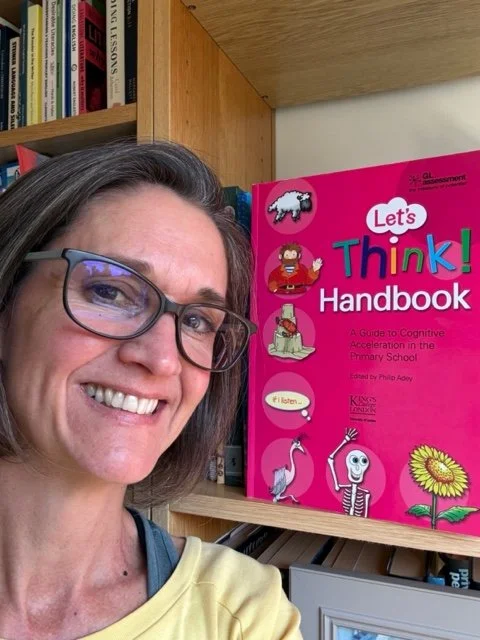
Leah Crawford explains the origins of the cognitive acceleration programs, specifically "Think in English," which began at King's College in London.
Leah introduces Michael Shea and Philip Adey, the cognitive psychologists who developed the program.
The program was created to address the gap between the national curriculum standards and the intelligence levels of children in England.
Michael Shea and Philip Adey proposed making the curriculum more accessible or making the children more intelligent.
Influence of Vygotsky and Piaget
Leah discusses the influence of Vygotsky's socialization of intelligence and Piaget's stages of cognitive development on the program.
Vygotsky's concept of learning through social interaction is emphasized, particularly the role of more knowledgeable others in stimulating intelligence.
Piaget's stages of cognitive development, such as the pre-operational stage (ages 3-7), are explained, highlighting the limitations of children's thinking at this stage.
Leah explains that intelligence is malleable and can be stimulated through group interaction and complex problem-solving tasks.
Building Schema and Classification Exercises
Leah describes how the program uses classification exercises to build schema in children, starting with simple tasks and gradually increasing complexity.
Examples of classification exercises include sorting animals by characteristics like mommy animals and baby animals, and using Venn diagrams to create crossover groups.
The importance of group discussion and collaboration in these exercises is emphasized, as children learn to think more complexly by sharing their ideas.
Leah explains that the teacher's role is to facilitate group discussion and identify children who are starting to understand the problem, encouraging them to share their insights.
Application in English Language Teaching
Leah introduces Michael Walsh and Laurie Smith, who developed the program for English language teaching.
The program is adapted to English language learning, focusing on classification and schema building in texts.
Leah provides an example of a lesson where children classify a text as prose or poetry, using a classification system they develop.
The lesson involves reading a text and discussing its features, such as characters, setting, and language, to determine its genre.
Lesson Example: Classifying Texts
Melissa and Leah engage in a mock lesson where they classify a text as prose or poetry based on its features.
The text "An old silent pond" is read, and Melissa initially classifies it as a poem due to its brevity and imagery.
Leah explains that the layout and structure of the text can influence its classification, even if it contains prose-like elements.
The lesson involves children discussing and voting on the classification of the text, with the goal of developing a more complex understanding of text classification.
Application of Schema in English Language Learning
Leah explains how the program helps children develop a deeper understanding of text classification and genre.
The program encourages children to apply their schema to new texts, making adjustments based on their understanding.
Leah provides an example of a lesson where children are asked to make a text more poetic by changing its layout and language.
The lesson involves children discussing and applying their schema to improve their understanding of poetry and prose.
Advanced Lesson: Allegory and Social Messages
Leah introduces a more advanced lesson where children analyze a fable by Eve Bunting, "The Terrible Things."
The fable involves animals in a forest who are targeted by terrible things, and the lesson involves analyzing the message and meaning of the story.
Children rank the animals and the terrible things based on their responsibility for the events, leading to a discussion about the message of the story.
The lesson reveals that the story is an allegory for the Holocaust, encouraging children to think deeply about the social and moral messages in stories.
Conclusion and Resources
Leah explains that the program is designed to be flexible and adaptable to different age groups and contexts.
The program includes resources and training for teachers to implement the lessons effectively.
Leah mentions that the program has been successful in training teachers in international schools and has received positive feedback.
Melissa thanks Leah for the discussion and provides information on how listeners can access the program's resources and lessons.